Bathroom Tiling and Flooring in Croydon: What to Check Before You Choose
Bathroom tiling in Croydon lasts only as long as what is behind and beneath it. Bathroom Fitters Croydon runs a six-point surface check at a free survey, water exposure, substrate, slip, drainage, movement and maintenance, before recommending any tile or floor. Then our tilers prepare, waterproof, set out and fix it, and our workmanship guarantee covers the finish and the preparation behind it.
Book a free tiling survey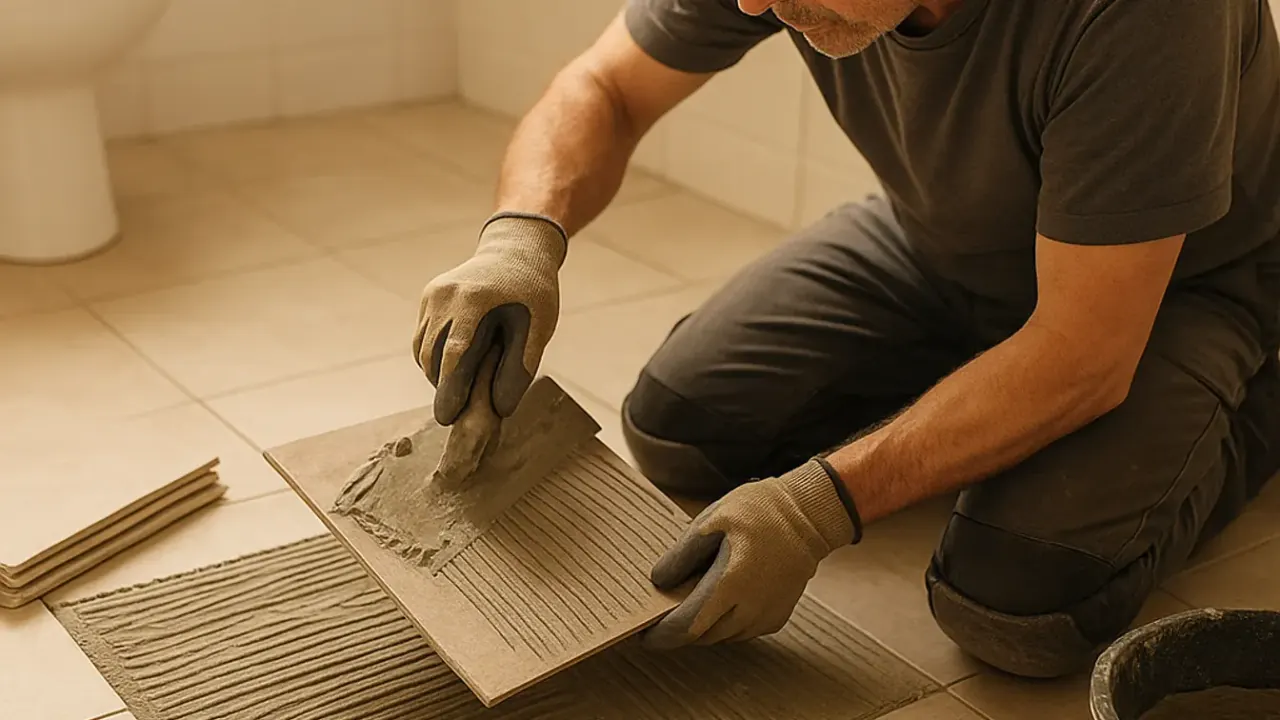
Bathroom tiling and flooring in Croydon: choose the system, not just the surface
The tile is one part of a system that includes the wall board or floor base, the waterproofing in wet areas, the adhesive, grout, movement joints and sealant. A beautiful tile on an unsound wall fails; a plain tile on a prepared, tanked wall lasts. The best tile depends on how wet each surface gets, what it sits on, and how the room is used.
The bathroom surface system check
| Check | What we look at | What it rules in or out |
|---|---|---|
| Water | Basin splashback, bath surround, shower enclosure, wet room floor | Whether tanking is needed, and how far |
| Substrate | Plaster, plasterboard, backer board, timber or concrete floor; flatness, rigidity, dryness | Whether the surface can take the tile and its weight, or needs boarding or levelling |
| Slip | Wet barefoot use, children, older users, mobility needs | Floor tile finish and size; whether a textured or small-format tile is needed |
| Drainage | Shower tray edges, wet room falls, drain position | Tile format and layout on the floor |
| Movement | Suspended timber floors, underfloor heating, junctions between walls and floor | Overlay boards, movement joints, flexible adhesive and grout |
| Maintenance | How much cleaning and resealing the household will tolerate | Grout width and colour, natural stone or not |
Which bathroom tile or flooring fits your bathroom?
There is no best bathroom tile in general; there is the right one for each surface. The table compares the common choices against the conditions that decide them. Final suitability depends on the specification and the survey, and we confirm the product's wet slip rating and floor suitability before ordering.
| Material | Strengths | Watch for | Typical use |
|---|---|---|---|
| Porcelain | Very low water absorption, hard-wearing, wide range of finishes | Glossy floor finishes can be slippery when wet; large formats need a very flat base and are heavy | Walls and floors throughout |
| Ceramic | Lighter, easier to cut, wide range | Usually softer; check it is rated for floors before using it underfoot | Walls; floors where rated |
| Natural stone | Character, warmth of colour | Needs sealing; marble and limestone etch with acid cleaners; product-specific care | Feature walls, floors with suitable sealing |
| Mosaic | Follows falls and curves; many grout lines give grip | More grout to clean | Wet room and shower floors, niches |
| Vinyl and LVT | Warm, quiet, lower build-up, quick to fit | Seams, edges and perimeter detail decide whether water gets under; not a wet room floor | Bathroom floors outside wet areas |
Porcelain and ceramic tiles
Porcelain and ceramic are the default for good reason, but the label matters less than the finish and the format. A glossy porcelain looks the same on a wall and a floor; on a wet floor it behaves very differently from a textured one. Large formats mean fewer grout lines and quicker cleaning, but they need a flatter base, careful handling and more cuts in a small room. We check the manufacturer's floor rating and wet slip data before specifying a floor tile.
Natural stone and mosaic
Natural stone brings character and needs care. Each stone has its own sealing and cleaning requirements, and acid cleaners, including some limescale removers, can etch marble and limestone. Thames Water and SES Water both supply hard water here, so we hand over care instructions specific to the stone.
Mosaic is more than decoration: small tiles follow the falls of a wet room floor where a large tile would need awkward cuts, and the grout lines give grip. The wet rooms page covers floor falls in detail.
Vinyl and LVT bathroom flooring
Vinyl and LVT are warm, quiet and quick, and suit a bathroom floor outside the shower area. "Waterproof" on the box describes the material, not the installation: water gets under at the seams, the edges and where the floor meets the bath panel or the toilet. A good vinyl floor depends on a smooth, level subfloor, sealed perimeters and properly finished transitions. It is not a wet room floor.
What must happen before tiling or flooring is fitted
Preparation decides whether a surface stays stable and protects the room behind it. Tiling can hide a defect for a few months, but it cannot fix an unstable base. Every tiling job we quote runs the same order: remove and inspect, repair and prepare, waterproof where needed, set out, fix, grout and seal, then hand over with care instructions.
- Remove and inspect: the old tiles and adhesive come off where included, and the surface behind is examined. Damage found is shown to you and priced before we continue.
- Repair and prepare: surfaces made flat, clean, dry and sound; boards securely fixed; water damage or movement addressed.
- Waterproof: a compatible tanking system in wet areas, with corners, junctions and pipe penetrations treated, photographed before tiling.
- Set out: the tile layout, cuts, edges and grout colour agreed with you.
- Fix: a compatible adhesive with full coverage, open times observed.
- Grout and seal: product cure times observed; movement joints formed; flexible sealant at bath and tray junctions.
- Hand over: care and cleaning instructions, and when the shower can first be used.
Published guides put a full bathroom of wall and floor tiling at around three to four days (Checkatrade, MyJobQuote), with preparation, waterproofing cure and grout cure on top. Your programme shows the days.
Substrate, flatness and movement
A wall that looks flat is not always flat enough, and a floor that feels solid is not always stable enough for tile. The tiling codes of practice, BS 5385-1:2018 for walls and BS 5385-3:2024 for floors, set out what a background must be, and two points matter most in older Croydon houses.
First, plasterboard and plaster are conditional backgrounds in wet areas, with weight limits and tanking required; we use tile backer board in showers. Second, under the current floor code, tiles are no longer fixed directly to timber or plywood floors; a suitable overlay board goes down first.
Tanking and waterproofing in shower areas and wet rooms
Tiles, adhesive and grout are not a waterproof barrier. BS 5385-1:2018, as quoted in BAL's technical guidance, says wet-area substrates should be protected with a suitable proprietary tanking system. We name the system in the quote, apply it to the manufacturer's instructions, treat every corner, junction and penetration, and photograph it before tiling. The extent depends on the shower type and the substrate; a wet room is waterproofed across the whole floor and up the walls, covered on the wet rooms page.
Bathroom floor safety, drainage and everyday use
A bathroom floor is a safety and water-management decision before it is a style one. Wet barefoot use, children, older relatives and reduced mobility all change the right choice. We ask for the product's wet slip test results rather than judging by look, and choose texture, size and grout pattern for the people using the room.
The HSE treats a pendulum test value of 36 or more as low slip potential in the relevant conditions; we use that as a reference, not a guarantee.
Wet rooms and walk-in showers
Where the floor itself carries water to a drain, the layout of the tiles has to follow the fall. Small formats and mosaics shape around multi-directional falls to a point drain; a linear drain allows a single fall and larger tiles. The transition from the wet area to the rest of the floor needs a defined detail so water stays in. For tray-based showers and their tile edges see walk-in showers; for level access see accessible bathrooms.
Tile layout, grout and finishing details
Four finish decisions shape how the room looks and how easy it is to live with: tile scale, orientation, grout colour and the edge details. We agree all four with you at set-out, before a tile is fixed, and record them in the quote so there is no surprise on the wall.
- Scale: large tiles mean fewer joints but more cuts in a small room; small tiles suit niches and falls.
- Orientation: horizontal makes a narrow room look wider; vertical draws the eye up; a herringbone or offset needs more cutting and more tile allowance.
- Grout colour: a matching grout hides the grid; a contrast shows it, and shows dirt sooner.
- Edges and transitions: trims, mitred corners, sealant at the bath and tray, and the floor-to-wall junction, each specified rather than left to the day.
Regrouting refreshes the look but does not fix water getting behind the tiles. If grout keeps cracking or mould returns, the problem is behind the surface, and we investigate before quoting a cosmetic fix.
Can you tile over existing bathroom tiles?
Sometimes, but rarely in a shower area. Tiling over adds weight and thickness, hides whatever is behind, and depends on the old tiles still being fully bonded. We check the bond, the build-up against door and fitting clearances, flatness and any sign of damp before saying yes; in a wet area we remove them, because what is behind is the reason to look.
Where tiling over is suitable, typically on a dry wall away from water with sound, flat tiles, it can save strip-out time. Cost questions on either route are on the bathroom costs guide.
Questions to ask any bathroom tiler before you compare quotes
Compare tiling quotes on the scope, not the total. A low figure that leaves out preparation, waterproofing or trims is a smaller job, not a cheaper one. Ask any tiler these questions, including us; our quote answers each in writing, with every item marked as included, excluded or subject to survey.
- What base preparation is included, and what happens if the wall or floor is damaged?
- Which areas get waterproofing, and which system is used?
- Is removal, disposal, levelling, trims, grout, sealant, thresholds and making good included?
- For a wet room or walk-in shower floor, how are the falls and the drain detail handled?
- What is the tile's wet slip rating, and is it rated for floors?
- What care and cleaning guidance will I receive, and when can the shower be used?
Bathroom tiling and flooring FAQs
How long does bathroom tiling take?
Published guides suggest around three to four days for walls and floor in a full bathroom, one day for a floor alone, plus preparation and cure times. Your programme shows the exact days and when the shower can be used.
What is the best type of tile for a bathroom?
The one that suits each surface: porcelain for most walls and floors, a textured or small-format tile on a wet floor, mosaic for falls, and natural stone only where the household will seal and care for it. We specify after the six-point check.
Can cracked bathroom tiles be repaired instead of replaced?
Individual tiles can be replaced if spares exist and the cause is a knock. If tiles are cracking or lifting because the wall or floor is moving, replacing the tiles will not fix it; we investigate the background first.
Do I need underfloor heating under bathroom tiles?
It is optional comfort and helps a floor dry. Electric underfloor heating in a bathroom can be notifiable under Part P; our registered electrician connects, tests and certifies it.
How do I look after a newly tiled bathroom floor?
Wait for the cure time we give you before heavy use, clean with a pH-neutral cleaner, avoid acid limescale removers on natural stone, and reseal stone as its care sheet says. Thames Water and SES Water both supply hard water here, so wiping glass and grout after use reduces scale.
What should a tiling quote include?
Removal, disposal, base preparation, boards, waterproofing by system, tiles or labour only, adhesive, grout and sealant, trims and thresholds, any underfloor heating with its electrical work, making good, exclusions and how changes are agreed.
Book a free bathroom tiling survey in Croydon
Tell us which surfaces you want tiled or floored, whether a shower or wet room is involved, what is there now and whether there has been any leak or damp. We will book a free survey, run the six-point check, and send an itemised quote with the preparation, waterproofing and tile specification stated, and our workmanship guarantee written in.